
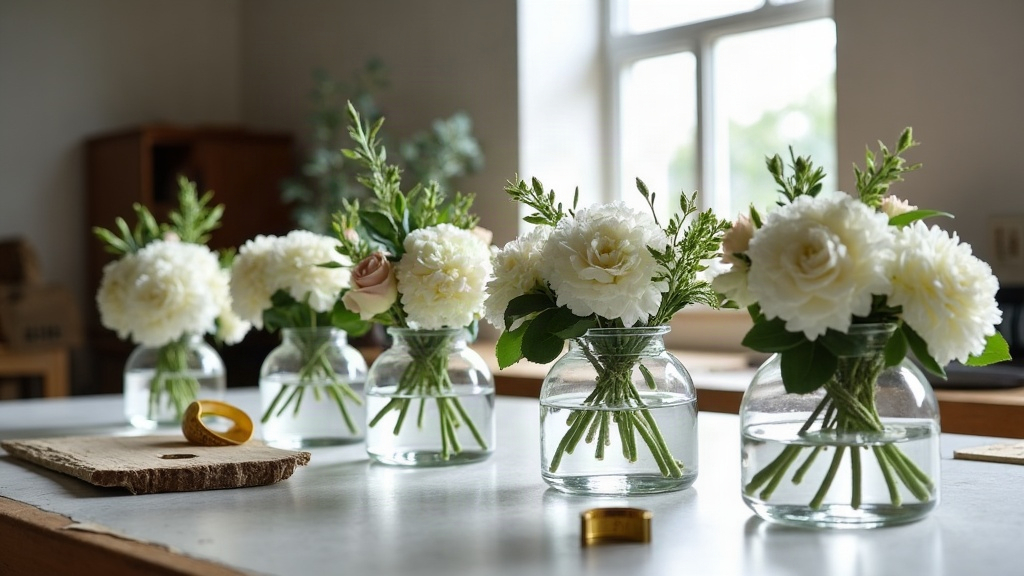
If you need wholesale glass vases for florists in 2026, start with a tight core set that covers 80% of your orders—clear cylinders (3×6, 4×8, 5×10 in), cubes (4 in, 5 in, 6 in), bud vases (7–9 in), compotes (8–10 in), and a few statement pieces (trumpets or hurricanes)—then layer in tinted options seasonally. Prioritize optical clarity, consistent dimensions, thick bases and rims, secure case packing, and reliable replenishment from a distributor that can ship quickly from regional warehouses. This gives you predictable stem capacity, fewer breakages, smooth event logistics, and better margins.
Why this guide matters for professionals
Florists, wedding and event designers, and gift retailers depend on glass vases that arrive on time, look flawless on camera, hold stems securely, and survive transport and turnaround. The wrong vase increases breakage, delays, and labor costs; the right wholesale assortment makes weekly accounts effortless and lets event teams scale up without drama. As a distributor of Polish-made glassware, candles, and décor with warehouses in Mississauga, ON and Suwanee, GA, Canpol supports trade buyers across Canada and the USA with dependable supply and repeatable quality. This guide gives you the criteria, formulas, and checklists to buy smarter, style faster, and protect your margin.
What trade buyers should look for in wholesale glass vases
1) Optical clarity and color cast
For retail and weddings, clear glass remains the universal workhorse. Look for glass that reads neutral (no green or blue cast) so stems and water photograph cleanly. Tinted smoke, amber, and muted colorways are excellent for seasonal retail but can complicate color matching for bridal parties—stock them as accents, not core.
2) Wall thickness, base weight, and rim finish
- Wall thickness: Slightly thicker walls improve durability and temperature tolerance during washing and transport.
- Base weight: Heavier bases stabilize tall arrangements and reduce tip risk on narrow tables and windy outdoor installs.
- Rim finish: Smooth, even rims reduce ribbon fray and floral tape abrasion and are safer for staff.
3) Dimensional consistency and repeatability
Event recipes and stem counts rely on predictable inside diameters and heights. Variations of even a few millimeters can shift flower usage and labor. Ask your distributor about production tolerances and stick with lines that repeat well from case to case.
4) Capacity and stem support
Water capacity and opening diameter dictate stem count, foliage volume, and hydrangea or branch mechanics. Cylinders with thick, flat bases and true inner walls allow reliable tape grids, chicken wire, or pin frogs.
5) Manufacturing method
- Machine-made soda-lime glass: The industry standard for wholesale vases—cost-effective, consistent, and typically lead-free.
- Mouth-blown: Beautiful character and lighter weight, but with more dimensional variance; reserve for boutique retail or premium rentals where uniqueness is a selling point.
6) Packing and protection
Case packs should include dividers or corrugate that prevent rim-to-rim contact. Nested sets need separators or sleeves. For pallets, corner boards and shrink-wrapping reduce in-transit shock. Strong packing is non-negotiable for busy event weeks.
7) Availability and replenishment
Work with a distributor who holds depth on core sizes, can mix SKUs on a pallet, and ships from regional warehouses. For Canpol customers, that means fulfillment from Mississauga, ON for Canadian buyers and Suwanee, GA for US buyers—shorter lanes, less handling, and quicker replenishments.
8) Compliance and safety
Most floral vases are soda-lime glass, used widely for food-contact categories and generally considered lead-free, but if you plan to repurpose jars for food service, verify specifications with your distributor. For candle use, confirm thermal guidance and distance-to-flame rules for any hurricane or lantern form factor.
Essential vase shapes for florists and event designers
Cylinders
The most versatile category. Cylinders accept tape grids, frogs, and chicken wire; they read modern in clear, and classic with compote-style mechanics inside. Lean sizes: 3×6 in (petite), 4×8 in (everyday), 5×10 in (event mainstay), and 6×12 in (statement). Narrower 2–2.5 in bud cylinders are perfect for cocktail rounds and bars.
Cubes
4, 5, and 6-inch cubes shine in retail and corporate weekly accounts. Wide openings suit mixed stems and foliage-heavy designs. Cubes pack and stack efficiently; add glass liners when using in ceramic outer shells or rental boxes.
Bud vases
Slender necks support single blooms or small posies, ideal for tablescapes, bud-vase bars, and gift merch. Vary silhouettes—bottle, round, tapered—to add texture. Heights between 7–9 inches keep sightlines open.
Compotes and pedestal bowls
For airy, garden-style centerpieces with mechanics inside (frog or chicken wire). Diameters around 8–10 inches cover most 60-inch round tables. Weighted pedestals prevent tipping; matte or satin finishes pair well with taper candles.
Hurricanes and pillar sleeves
Guard flame from drafts and guests. Also double as floral vessels in a pinch. For candle programs, stock 6×8, 6×10, and 6×12 in heights, and ensure inner diameters fit your most common pillar sizes with safe clearances.
Trumpets and pedestal vases
High-impact for ceremony aisles, stages, and buffet anchors. Confirm base plate size for pedestal stability and plan weighted inserts where venues restrict sandbags or water weights.
Fishbowls and rounds
Great for floating candles, orb designs, and front-desk arrangements. Keep 5, 8, and 10-inch diameters. For events, pre-stage in racks to avoid rolling.
Apothecary and lidded jars
Merchandising heroes for retail displays and candy bars. Remove lids during events to avoid accidental drops. Clear labeling helps venue staff during strike.
Comparison guide: shape selection by use-case
| Shape | Best for | Pros | Watch-outs | Typical stem load | Transport risk |
|---|---|---|---|---|---|
| Cylinder 4×8 in | Retail, corporate, low centerpieces | Universal fit, easy mechanics, stacks well | Can look plain without foliage texture | 10–18 mixed stems | Low |
| Cylinder 5×10 in | Weddings, hotel, ceremony side tables | Stable, photogenic, fits hydrangea | Heavier; check shelf limits | 15–25 mixed stems | Low–Medium |
| Cube 5 in | Retail, sympathy, weekly accounts | Compact, foliage-forward, easy to gift-wrap | Water line visible—keep clean | 10–16 mixed stems | Low |
| Bud vases (7–9 in) | Tablescapes, bars, gift add-ons | High perceived value in clusters | Breakage if packed loosely | 1–5 stems | Medium |
| Compote 9 in | Garden-style centerpieces | Airy designs, hides mechanics | Requires secure transport trays | 20–30 mixed stems | Medium |
| Hurricane 6×12 in | Pillars, windy venues, outdoor dining | Flame-safe, multi-use | Verify candle clearance and soot | n/a (candle) | Medium |
| Trumpet 24–28 in | Ceremonies, lobbies, photo ops | Big look from distance | Top-heavy; secure bases | 30–50 mixed stems | High |
Core SKU blueprint: build an assortment that works every week
Most professional buyers find that a disciplined set of core SKUs drives the majority of weekly revenue. Then they rotate color and specialty forms for seasonality and trend.
- Cylinders (clear): 3×6, 4×8, 5×10, 6×12 in (case-packed). Add 2–2.5 in bud cylinders.
- Cubes (clear): 4 in, 5 in, 6 in.
- Bud vases (clear/mix silhouettes): Assorted 7–9 in heights.
- Compotes: 8–10 in diameter, pedestal or footed bowl.
- Hurricanes: 6×8, 6×10, 6×12 in for pillar programs; coordinate with candle diameters.
- Statement shapes: A trumpet/pedestal option for ceremonies and lobbies.
- Seasonal/tinted: Smoke or amber cylinders and bud vases as accent inventory; keep case depths modest.
Sizing, water, and stem count: practical working ranges
Every designer has a style, and stem thickness varies by supplier and season. Use these ranges as planning baselines, then test with your go-to flowers.
- 3×6 in cylinder: 6–12 stems; petite retail, cocktail rounds.
- 4×8 in cylinder: 10–18 stems; standard retail and corporate accounts.
- 5×10 in cylinder: 15–25 stems; weddings and hotel tables.
- 6×12 in cylinder: 20–30 stems; ceremony arrangements, lobby.
- 5 in cube: 10–16 stems; compact mixed designs.
- Compote 9 in: 20–30 stems with chicken wire/frog inside.
- Bud vases: 1–5 stems; run 3–7 per 8-foot table for impact.
Hydrangea counts as 3–4 “stem-equivalents” in tight openings; garden roses and standard roses are 1 each; eucalyptus can bulk mechanics without crowding.
Step-by-step: how to plan, order, and receive wholesale glass vases
Step 1: Forecast by program
- List standing accounts (weekly corporate, restaurants, hotels) and their vessel sizes.
- Add booked events with centerpiece and accent counts by table size.
- Layer gift retail peaks (Mother’s Day, Valentine’s, Thanksgiving, December holidays).
Step 2: Convert recipes to units
Create a bill of materials for each program. Example: a 150-guest wedding with 15 round tables at 10 guests might need 15 centerpieces (compote 9 in), 20 bud vases for bars, and 12 cylinders 6×12 in for pillars or statement florals. Multiply by backup cushion (5–10% for events; more if venue has stairs or gravel paths).
Step 3: Check on-hand, then reserve replenishment
Audit your clean, unchipped stock. Label cases by shape/size and count. For gaps, place a consolidated order to minimize freight. If you run multi-location, assign a single purchaser to avoid double-buying.
Step 4: Choose pack sizes and nesting
- Prefer factory case-packs with dividers for cylinders and cubes.
- For nested bowls, verify separators between each vessel to avoid rim rash.
- Ask for mixed-pallet options when building a broad assortment—group heavy bases at pallet bottom.
Step 5: Plan shipping and lead time
Factor warehouse origin. Canadian customers typically benefit from Mississauga, ON; US customers from Suwanee, GA. Ground shipping within the region is often faster and gentler than long-haul. Book earlier for peak weeks to allow for re-picks if a carrier damages a case.
Step 6: Receive, inspect, and stage
- Open cartons on padded tables. Avoid blades near rims.
- Inspect immediately. Document any transit damage with photos of packaging and affected pieces; report promptly.
- Wash new glass to remove kiln dust or carton residue; air-dry on racks that don’t touch rims.
- Sticker or barcode now, not event week. Standardize label positions.
Costing and margin protection
Healthy margins on glassware come from accurate landed cost calculations and realistic breakage allowances.
Know your landed cost
- Unit cost (by case or pallet) + inbound freight + duties/taxes (if applicable) + receiving labor + storage/handling.
- Allocate freight fairly: spread by weight or cube so heavier items carry their share.
Set a breakage allowance
Even with great packing, some breakage occurs at receiving, in washing, or on trucks. Build a small percentage into COGS for event rotations and returns. Track monthly to spot training issues (e.g., rim-to-rim stacking).
Rental and resale math (framework)
- For rental: Target payback in a fixed number of turns, then margin thereafter. Example framework: Rental rate per event = (Landed cost / target turns) + cleaning labor + handling + a margin factor.
- For retail resale: Use a consistent markup tier by category and presentation (simple vase vs designed arrangement). Transparent pricing builds customer trust.
Packaging, washing, and care that extend lifespan
Unpacking and staging
- Set up soft, non-slip mats at unboxing stations.
- Keep factory dividers for future storage or returns.
- Train staff to lift vases by the body, not the rim.
Washing and spotting
- Warm water with a non-abrasive detergent removes production dust.
- For hard water spots, a vinegar rinse helps; avoid scouring pads that haze glass.
- Allow air gaps on drying racks; never nest while wet.
Storage
- Use original cartons with dividers or adjustable glass racks.
- Pad between nested pieces with sleeves or kraft.
- Store heavy bases low; avoid high shelves for tall trumpets.
Transport
- Milk crates or specialty vase crates with foam cells reduce movement.
- Strap stacks and block to prevent sliding.
- For pre-designed compotes, use shallow tray systems that prevent tipping; pack floral foam or mechanics tight.
Sustainability and reuse
- Long-lived, durable glass reduces replacement frequency—choose thicker bases and rims for rental fleets.
- Offer return credits for corporate accounts to recapture vessels.
- When retiring scratched or chipped pieces, recycle according to local programs or donate intact sets to community groups.
Styling playbook: make each shape earn its keep
Retail bouquets and gifts
- 4×8 cylinder: A dozen mixed stems with a foliage collar and a clean water line reads premium and fast to build.
- 5 in cube: Use a leaf wrap liner to hide stems; it elevates perceived value without extra flowers.
- Bud vases: Merch three-by-three in tonal palettes; upsell as add-on gifts at checkout.
Corporate weekly accounts
- Standardize to one or two vessel sizes for speed and repeatability.
- Choose heavier bases for lobbies with airflow from doors or HVAC.
- Keep a duplicate clean set; swap weekly to avoid on-site washing.
Wedding centerpieces
- Compote 9 in: Build with a reusable frog and chicken wire; transport in low trays with non-slip mats.
- 4×8 or 5×10 cylinders: For modern looks, tape grids deliver clean domes that hold up through photos and dinner.
- Bud vase clusters: Run odd numbers per table; vary heights slightly; repeat palettes across the room for cohesion.
Sympathy and hospitality
- 5 in cube: Compact, stable, easy to place near guest traffic.
- Fishbowl 8–10 in: Floating candles with minimal florals create serene displays.
Candle integration
- Match hurricanes to pillar diameters with at least a few millimeters clearance all around for airflow and heat.
- For mixed centerpieces, space flames away from foliage and rim; soot can mark glass and petals.
Risk management: reduce breakage and event-day stress
- Track breakage by location and cause (receiving, washing, loading, venue). Use data to fine-tune training.
- Keep a labeled “emergency glass” shelf: extra cylinders, bud vases, and a couple of compotes for last-minute adds.
- Bring a field kit: alcohol wipes, microfiber cloths, clear adhesive dots, museum putty for wobbly surfaces.
- Take venue notes: elevator size, ramp access, wind exposure, table material; choose heavier bases when needed.
How to evaluate a wholesale distributor for glass vases
- Product quality: Optical clarity, smooth rims, even bases, and consistent sizing.
- Packing and pallets: Dividers, nested protection, solid cornering and stretch-wrap.
- Inventory depth: Can they cover your core SKUs in season without substitutions?
- Regional logistics: Warehouses that shorten shipping lanes—e.g., Mississauga, ON for Canada and Suwanee, GA for the USA.
- Trade focus: Understanding of florist/event timelines, case packs aligned to common recipes, and the ability to mix SKUs on orders.
- Service: Responsive support for damage claims and order adjustments.
Checklist: are you ready to order?
| Item | Status | Notes |
|---|---|---|
| Event/retail calendar reviewed (next 8–12 weeks) | Yes / No | Peak dates identified |
| Core SKUs mapped (cylinders, cubes, buds, compotes) | Yes / No | By case and turn target |
| Specialty/tinted accents selected | Yes / No | Seasonal limits set |
| On-hand inventory counted and inspected | Yes / No | Chips/scratches culled |
| Inbound freight and lead time confirmed | Yes / No | Warehouse origin chosen |
| Packing requirements noted (dividers, nesting) | Yes / No | Crates/racks ready |
| Receiving team scheduled | Yes / No | QC steps assigned |
| Breakage allowance updated | Yes / No | COGS model current |
Troubleshooting common issues
Water turns cloudy quickly
- Pre-wash glass; residues can seed cloudiness.
- Rinse stems thoroughly; some foliage leaches sap.
- Use clean buckets and replace water after initial hydration.
Arrangements shift in transport
- Underfilled mechanics: add a tighter chicken wire pack or a pin frog base.
- Use non-slip shelf liner under each vase; pack snugly in crates.
- Avoid tall, top-heavy shapes in vehicles without tie-down points.
Rim chips appear over time
- Stop stacking rim-to-rim; add separators.
- Retrain washing: avoid metal-on-glass contact in sinks.
- Rotate stock to rest high-use items between peak weeks.
Color cast clashes with florals
- Standardize to neutral clear for core; keep tinted for curated stories.
- Test bouquets in-store under your lighting before event massing.
Budgeting inventory depth for peak seasons
Peak retail weeks can triple demand on cylinders and cubes. Back into case counts from last year’s sales plus growth. For events-heavy quarters, compotes and hurricanes spike; build a buffer for replacements between back-to-back weekends. Shipping from regional warehouses lets you place a mid-peak top-up if needed, but don’t rely on last-minute freight for large events—carrier networks get congested around holidays and weather systems.
Coordinating glass vases with candles and décor
- Align hurricanes and pillar diameters to your candle program; test soot and clearance.
- Use matching glass families (same tint/clarity and profile) for cohesive tablescapes.
- Pair compotes with low votives and tapers to vary heights without blocking sightlines.
Polish-made glass advantages for professional use
- Refined finishing and tactile quality that reads premium in hand and on camera.
- Consistent sizing from mature manufacturing lines—critical for event recipes.
- Strong clarity that flatters stems and water treatments.
For trade buyers in Canada and the USA, sourcing Polish-made glass through a regional distributor streamlines logistics while protecting design integrity.
Putting it all together: a sample assortment plan
Below is a compact plan that works for many studios handling both retail and events. Adjust counts to your scale.
- Weekly retail core: Cylinders 3×6, 4×8, 5×10 (2–4 cases each), cubes 4 and 5 in (2–3 cases each), assorted bud vases (1–2 mixed cases).
- Event core: Compotes 9 in (2–4 cases), cylinders 6×12 (1–2 cases), hurricanes 6×10 and 6×12 (1–2 cases each), trumpets (as needed per season).
- Accent/seasonal: Smoke or amber bud vases and select cylinders (limited cases).
- Backups: A small emergency shelf of each high-velocity SKU for last-minute orders.
Ordering smarter with regional fulfillment
Transit distance and handling steps correlate with risk of damage and delays. Buying from a distributor with warehouses near your operation reduces both. For Canadian florists and event teams, Mississauga, ON is strategically placed for efficient coverage; for US buyers, Suwanee, GA serves the Southeast and ships swiftly across the country. Consolidate orders across glass, candles, and décor to capture freight efficiencies and predictable delivery windows.
Your next steps
- Finalize your core SKU list by use-case.
- Run a quick stem-count test in your preferred sizes to validate ranges.
- Map events and retail peaks, then place a consolidated order with sufficient lead time from the nearest warehouse.
- Set up a receiving and QC routine that protects rims and bases, and standardize washing and storage practices.
With a reliable core of wholesale glass vases for florists—backed by strong packing and regional logistics—you can scale busy weeks confidently and deliver consistent, camera-ready designs across retail, weddings, and corporate programs.
Frequently asked questions
What are the must-have wholesale glass vases for a florist just starting out?
Begin with clear cylinders (3×6, 4×8, 5×10 in), cubes (4, 5, 6 in), assorted 7–9 in bud vases, and an 8–10 in compote. These cover most retail, corporate, and wedding needs. Add hurricanes if you run a candle program.
How many stems fit in a 5×10 inch cylinder?
Plan for 15–25 mixed stems depending on stem thickness and style. Hydrangea counts as several stem-equivalents. Always test with your preferred flowers to confirm your recipe.
Should I stock tinted glass or stick to clear?
Keep clear as your core for versatility and color accuracy. Add smoke or amber accents seasonally for retail storytelling. Use tinted sparingly for weddings unless the palette specifically calls for it.
What packing features reduce breakage on pallets?
Look for factory dividers or sleeves that prevent rim contact, sturdy cartons, corner boards, and secure stretch-wrap. Heavy-base items should be placed low on the pallet with even weight distribution.
Can hurricanes double as floral vessels?
Yes. Hurricanes can hold arrangements or pillars. If using candles, ensure adequate clearance for heat and soot control. If using for florals, test mechanics and transport trays to prevent tipping.
How do I clean hard water spots on glass vases?
Use a vinegar rinse after washing with a non-abrasive detergent. Avoid scouring pads that can haze glass. Dry on racks with airflow and keep rims from touching.
What’s the best way to forecast case quantities before peak weeks?
Review last year’s sales by shape and size, add expected growth, and convert upcoming event recipes into units. Build a 5–10% buffer for events and confirm lead times from the nearest warehouse.
Are Polish-made vases suitable for rental fleets?
Yes. Polish-made glass is known for clarity and consistent finishing. Choose thicker bases and rims for durability, and standardize sizes to simplify washing, storage, and replacements.
Order from Canpol
explore the full wholesale catalogue. Wholesale pricing is shown once you log in to your trade account — or contact our team to open one.