
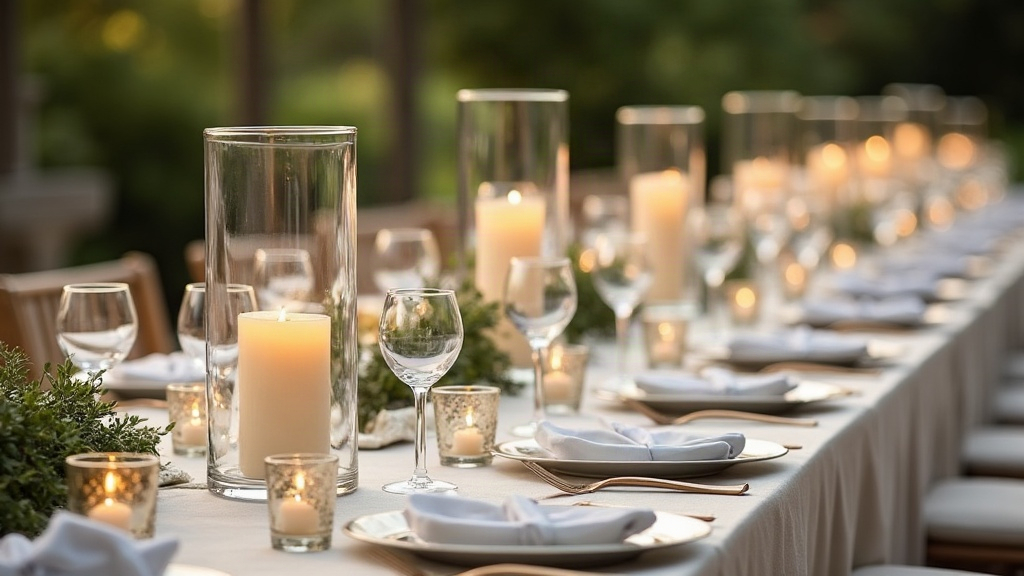
If you need a fast, professional answer on <a href="https://canpolltd.com/2026/06/06/how-to-choose-candles-for-event-and-wedding-styling/”>how to choose candles for event styling: start with venue rules (open flame vs. enclosed or LED), then match candle type to use-case (pillars in hurricanes for centerpieces, tapers for formality, votives/tealights for accent, floaters for water moments), size up diameters for longer burn and stability, choose unscented and drip-resistant event grades, calculate burn hours against the event timeline with 30–50% safety margin, and always pair flame with the right glass vessels and placement plan. Build and test a single full mock-up centerpiece before you bulk order, and over-order 10–15% to cover breakage, extras and last-minute adds.
Why candles still win the room
Candles deliver an unmatched blend of light quality, texture, and silhouette that venue fixtures and LEDs can’t perfectly replicate. For wedding designers, florists, and gift retailers building tablescapes and vignettes, the right candle mix elevates flowers, glass, and linens; guides the eye; and sets the mood from arrival to last toast. But not all candles are equal: wax blend, wick type, diameter, finish, and the vessel ecosystem determine how long they burn, how cleanly they perform, and whether your design looks polished after hour three instead of tired and drippy.
This how-to buying guide distills professional selection criteria, sizing rules, burn-time math, safety and compliance considerations, and practical trade tips based on what works for event pros across Canada and the USA—with wholesale availability through Canpol’s distribution network and quick ship from our warehouses in Mississauga, ON and Suwanee, GA.
Match search intent, fast: What to buy, when, and why
- Centerpieces with lasting glow (4–8 hours): choose pillar candles 2.5–3″+ diameter inside hurricane cylinders or footed hurricanes; supplement with votives in holders around the base.
- Formal head tables and aisles: specify taper candles (standard 7/8″ or slim) in weighted holders; consider dripless, smokeless event-grade.
- Accent sparkle and shelf styling: votives or tealights in clear or colored cups; glass cups improve flame stability and glow.
- Water features and basins: floating candles sized to vessel diameter; combine with submerged florals for depth.
- Wind-prone patios: use enclosed hurricanes/lanterns or shift to LED candles where open flame is restricted.
Selection criteria that actually matter
1) Venue policy and compliance first
Every selection starts here. Confirm whether the venue allows open flame, and under what conditions. Common variations event pros encounter:
- Open flame permitted only if fully enclosed above the flame line (e.g., inside a hurricane that stands higher than the flame).
- Open tapers allowed with drip trays and flame at least 2″ below the rim of a chimney.
- LED-only on historic properties, museums, and some corporate buildings.
- Specific surface protection required (coasters, saucers, heat mats) on wood, lacquered, or rental tables.
Tip: Get the policy in writing, including the definition of “enclosed,” and send your mock-up photo to the venue manager for pre-approval. This eliminates surprises on install day.
2) Burn time versus event schedule
Align the candle’s realistic burn window with the show flow:
- Cocktail hour + dinner + speeches: plan 5–6 hours minimum.
- All-evening gala: plan 7–8 hours (plus pre-lighting time and resets).
- Retail display lighting: often 4–6 hours per day over a season—LED or refuel strategy may make sense here.
General rule: choose larger diameters and taller forms for longer burns. A 3″ pillar commonly outlasts a 2″ pillar by several hours; a filled glass votive will outlast a bare tealight.
3) Candle type and intended use
- Pillars: Stable, long-burning, easy to hurricane. Great for centerpieces, mantels, and ceremony focal points.
- Tapers: Timeless vertical line that reads formal and editorial. Best for head tables, altars, and styled shots.
- Votives: Economical glow units that amplify glassware magic at the table edge and bar.
- Tealights: Micro accents for tight budgets and shelf styling; use inside cups for reliability.
- Floating candles: Dramatic when grouped in clear cylinders or bowls; benefit from Canpol’s Polish-made glass cylinders for clean optics.
- LED candles: Required where flame is banned; also useful for high-reach installs or long seasonal windows.
4) Wax blend and finish
Event-grade performance depends on formulation and finish more than brand romance. What to weigh:
- Paraffin or blends: Very consistent burn, reliable flame, strong drip resistance when well-formulated. Common in event pillars and tapers.
- Soy or soy-blends: Softer appearance and typically slower burn in containers; can be great for poured votives. For open pillars/tapers, ensure it’s an event-appropriate hard blend.
- Beeswax: Beautiful natural hue, longer burn per ounce; premium look for ritual or organic aesthetics. Consider beeswax-coated tapers for upscale ceremonies.
- Finish: Overdipped tapers achieve a clean, matte or satin look and better drip resistance. Textured or rustic pillars read artisanal but may show more drips; choose wisely for white linens.
Always choose unscented candles for dining spaces to avoid clashing with food and florals. Reserve scented candles for retail gift merchandising or entry vignettes, away from food service.
5) Wick type and flame behavior
- Cotton wicks: Standard for event pillars and tapers; stable flame, predictable trim.
- Paper-core or zinc-core: Help container candles stand tall; common in tealights and votives.
- Wood wicks: Great retail experience but can be finicky outdoors; better for gift retail than for time-critical installs.
Look for clean-burning, low-soot formulations. On site, trim wicks to 1/4″ before lighting for best performance and less smoking.
6) Diameter, height, and vessel pairing
Diameter determines burn time and stability. Height sets the visual rhythm. Pair both with glass that controls drafts and meets venue rules:
- 3″ diameter pillars inside 4″–5″ ID hurricanes feel balanced and protect flames well.
- 2″–2.75″ pillars fit snugly into 3″–3.5″ ID cylinders for more minimal tables.
- Standard 7/8″ tapers pair with weighted holders; if using chimneys, confirm fit and flame clearance.
- Votives belong in votive cups (clear glass or frosted). Tealights do best in glass cups to increase stability and perceived glow.
- Floaters need 1–2″ clearance to the vessel wall for safe circulation and to prevent soot on glass.
Pro move: Use Canpol’s range of clear cylinders, hurricanes, and footed riser glass (Polish-made glassware) to create vertical layers that are compliant and wind-smart while staying visually light.
7) Color and finish strategy
White and ivory dominate event work because they photograph cleanly and don’t compete with florals. Colored tapers and pillars are on-trend for editorial weddings and corporate brand moments. If you introduce color:
- Limit the palette to 1–2 tones and stagger heights within that palette.
- Color-test under the venue’s ambient lighting; LEDs can skew warm/cool and shift candle color.
- Avoid dyed candles near premium linens if you anticipate heat; overdipped colored tapers reduce transfer risk.
8) Budget, logistics, and risk management
- Cost per burn hour often beats “cost per candle.” A 3″ x 6″ pillar that burns 60+ hours can serve several events if you manage relights; for single-use shows, a 3″ x 4″ may be more optimal.
- Shipping and breakage: Build 10–15% overage. Canpol’s cross-border network helps you consolidate candles with glassware to reduce freight touches.
- Storage: Keep away from heat and direct sun. Store flat for tapers, upright for pillars. Separate colors to avoid transfer.
- Labor: Factor wick trimming, pre-melting votive cups (first light), and placement time. LEDs cut labor on relights but add battery swaps or charging cycles.
Step-by-step: How to choose candles for event styling
Step 1: Confirm the flame policy and floor plan
Before you mood board, secure the rules. Ask the venue:
- Is open flame allowed? If yes, must it be enclosed or below the rim?
- Any restrictions on taper candles?
- Surface protection requirements?
- Maximum candle count per table (some venues specify)?
- Set-up and strike windows (affects lighting strategy and number of techs on site)?
Overlay these rules on the floor plan. Mark focal zones (sweetheart, stage, bars), traffic corridors (avoid open flame within reach lines), and wind zones (doors, patios, tent edges).
Step 2: Define the lighting roles by zone
- Tables: Functional glow that flatters faces and florals without blinding. Use pillars and votives.
- Head table: Statement lines. Pull in tapers in classic holders or glass chimneys for skyline.
- Bars, escort displays, cake: Accent and depth; groups of votives/tealights or low floaters.
- Ceremony aisle: Symmetry and rhythm; tapers in lanterns/hurricanes or enclosed pillars.
- Outdoor zones: Lanters/hurricanes with weighted bases or LED swaps for breezy areas.
Step 3: Choose candle types and sizes
Once roles are defined, choose type/size for each role. Practical starting points:
- Centerpiece pillar set: one 3″ × 6″ pillar + one 3″ × 4″ pillar + 3–5 votives per 60″ round. Hurricane IDs 4–5″ and 3.5–4″ respectively.
- Head table taper run: tapers at 10–12″ height, spaced 10–14″ apart, interleaved with low florals; use drip trays or glass chimneys as required.
- Accent shelf: 5–7 tealights in glass cups per 4′ shelf, mixed heights of small bud vases.
- Water feature: 6–8 floating candles in 8–10″ diameter bowls or 6–8″ cylinders at varied heights.
Step 4: Calculate burn time and quantities
Use conservative estimates and a safety margin. Example framework for dinner service event:
- Venue access 3:00 pm; guests 6:00 pm; speeches end 10:30 pm; strike 12:00 am. Lighting window: 6.5–7 hours active, plus 15–30 minutes pre-light.
- Target: 7.5 hours effective burn. Build 30–50% buffer for wind/relights: plan for 9–11 hours rated burn for key candles.
Typical burn ranges to guide orders (actuals vary by formulation and environment):
- 3″ × 6″ pillar: 60–75 hours rated (usable multiple events; for a single-night show, expect 10–15% consumption).
- 3″ × 4″ pillar: 35–45 hours rated.
- Standard taper (10–12″): ~6–10 hours depending on diameter and draft control.
- Poured votive in glass cup: ~8–10 hours.
- Tealight (standard): 4–6 hours; long-burn tealights: 6–8 hours.
- Floating candle (3″): 6–8 hours; smaller floaters: 3–5 hours.
Quantity planning example for 20 tables (60″ rounds) with a pillar duo + 4 votives each:
- 3″ × 6″ pillars: 20
- 3″ × 4″ pillars: 20
- Votives + cups: 80 + 10–15% overage = 88–92
- Spare pillars for head table/mantel: add 10–15%
Order a few extras in each size to replace any that tunnel or get damaged on install.
Step 5: Select vessels and protective glass
Match glass to the candle and the rule set. Canpol’s Polish-made cylinders and hurricanes are workhorses for compliance and polish:
- Hurricane cylinder sets (e.g., 7″, 9″, 12″ heights): house 3″ pillars with generous headspace above flame.
- Footed hurricanes or bell-shape hurricanes: formal profile for head tables and mantels.
- Taper chimneys: clear glass sleeves that protect tapers in drafty rooms and satisfy “enclosed flame” policies.
- Votive cups: clear, ribbed, or frosted to control wax and elevate glow; required if venues ban open flame at table height.
- Lanterns: for patios and entry paths; choose weighted, wide-base forms for stability on pavers.
Spacing rule of thumb: keep 1–1.5″ minimum clearance from flame tip to glass rim for oxygen flow, and ensure the flame sits below the rim if that’s a compliance requirement.
Step 6: Build a full mock-up and perform a burn test
Buy one of each SKU you plan to use and run a table mock-up under similar airflow. Burn for 90–120 minutes. Check:
- Does the pillar start to tunnel or mushroom? Trim wick; adjust diameter or blend as needed.
- Any visible smoking on glass? Increase clearance or choose a different pillar/taper formulation.
- Is the flame protected from AC vents or tent drafts? Reposition or add a taller hurricane.
Photograph the mock-up from guest eye level and from across the room. Share with the venue for pre-approval.
Step 7: Place your wholesale order with buffers
Consolidate candles with glassware and decor to reduce freight touches. Shipping from Canpol’s Mississauga (ON) and Suwanee (GA) warehouses supports fast transit across Canada and the USA. Plan for:
- 10–15% overage on smalls (votives/tealights/floaters).
- 5–10% overage on pillars/tapers.
- Extra glass vessels for onsite swaps (chipped glass can fail venue inspections).
Step 8: Installation workflow and risk controls
On install day, follow a consistent sequence:
- Protect surfaces first (coasters, glass bases, risers).
- Place vessels, then place candles; trim wicks to 1/4″.
- Stagger lighting times: back-of-house zones first, then tables nearest guest arrival last.
- Assign one tech as “flame captain” to patrol drafts, relights, and wick trims for 45 minutes post-guest seating.
Keep a kit: long-reach lighters, snuffers, wick trimmers, microfiber, spare glass, felt pads, heat mats, nitrile gloves, extra candles, and a small fire blanket.
Comparison: Candle types for event and wedding styling
| Candle Type | Typical Burn Window (single use) | Pros | Watch-outs | Best Use Cases | Vessel Pairing | Relative Cost |
|---|---|---|---|---|---|---|
| Pillar (3″ dia) | All-night (7–8h) with margin | Stable, long burn, easy to enclose | Needs proper diameter to avoid tunneling | Centerpieces, mantels, ceremony | Hurricanes, cylinders, lanterns | $$ |
| Taper (7/8″) | 6–10h depending on draft | Elegant vertical line, formal | Draft-sensitive; may require chimneys | Head tables, altars, aisles | Weighted holders, chimneys | $$ |
| Votive (in cup) | 8–10h | Economical glow, easy massing | Needs glass cup for best results | Table edges, bars, shelves | Votive cups, mini hurricanes | $ |
| Tealight | 4–6h (standard), 6–8h (long) | Low cost, fast placement | Shorter burn; wind sensitive | Accents, retail shelving | Tealight cups, small holders | $ |
| Floating | 3–8h (size dependent) | Reflective drama, depth | Needs vessel clearance; water slosh risk | Feature bowls, ceremony basins | Bowls, cylinders, footed glass | $$ |
| LED | 10–400h (battery/charge) | Venue-compliant, wind-proof | Quality varies; color temperature matters | Flame-restricted venues, high installs | All standard vessels | $$–$$$ |
Trade scenarios and exact setups
Classic ballroom wedding (200 guests)
Goal: Timeless, candle-forward tables that meet a hotel’s enclosed-flame policy.
- Each 60″ round: one 3″ × 6″ pillar + one 3″ × 4″ pillar in 9″ and 7″ hurricanes; four clear votives.
- Head table: 12″ and 10″ tapers in matte holders behind a low floral meadow; add glass chimneys to satisfy the enclosure rule.
- Bars and cake: groupings of 7–9 votives with two 3″ floaters in 6″ bowls for reflected sparkle.
- Install note: Start lighting back rows 45 minutes pre-guest; head table and front row within 10 minutes of seating.
Outdoor tented reception (wind-aware)
Goal: Maintain flame in light breezes.
- Tables: pillars only inside taller hurricanes (12–15″); avoid open tapers; supplement with votives in glass cups with weighted bases.
- Perimeter: lanterns with enclosed pillars and sand bagging inside base for stability.
- Consider LED tapers at head table if drafts can’t be mitigated; hide bases with florals.
Corporate gala with brand color
Goal: Add brand color without overpowering.
- Colored tapers along the head table, alternating with neutral ivory pillars inside clear hurricanes.
- Colored glass votive cups (subtle tint) with unscented white tealights to control color cast.
- Test color under venue LEDs; choose 2700–3000K house lighting to flatter warm candlelight.
Retail gift window for holiday
Goal: Long-running display with low daily labor and safety.
- Use high-quality LED pillars on a timer inside Polish-made glass hurricanes for sparkle, paired with dried botanicals and ornaments.
- Accent with a few real tapers for VIP evenings only; swap back to LED after hours.
Micro-wedding with intimate tables
Goal: Max glow per square inch without crowding plates.
- Downsize to a 3″ × 4″ pillar in a 7–8″ hurricane plus 3 votives; add a single taper per guest pair in slim holders with drip trays.
Sizing and spacing cheat codes
- Hurricane inner diameter should exceed pillar diameter by 0.75–1.5″ for clean airflow and safe heat clearance.
- For tapers, maintain at least 3″ from florals and textiles; use non-drip tapers and protect with bobeches or drip trays.
- Votives: space 5–7″ apart on table edges to avoid glare hotspots and to photograph as a continuous glow line.
- Floating candles: keep 1–2″ from vessel wall; refill evaporated water discreetly mid-event if needed.
Compliance and safety, without killing the vibe
- Surfaces: Always use a heat-resistant barrier—glass coaster, mirror tile, or metal plate—under pillars on rental linens or wood.
- Line of sight: Keep flame tips below eye level for seated guests (typical eye line ~46–48″).
- Reach zones: No open flame within easy reach in buffet lines or tight corridors; switch to enclosed or LED.
- Snuff, don’t blow: Use snuffers to reduce soot on glass and prevent wax splash.
- Fire code: Respect local regulations and any requirements from the authority having jurisdiction (AHJ). When in doubt, enclose.
Working with glass: Elevation and optics
Glass multiplies candlelight. Polish-made cylinders and hurricanes deliver clean, color-true edges that photograph crisp. Design moves that work:
- Triple-height clusters: 7″, 9″, 12″ hurricanes around a floral compote to build rhythm without clutter.
- Footed risers: Lift a 3″ pillar 2–3″ off the table to clear floral greens and reduce heat on linens.
- Mirror bases: Small mirror tiles under votives double perceived glow; keep to 4–5″ so they don’t read as signage.
How many candles per table? Fast heuristics
- 60″ round, classic look: 2 pillars + 4 votives
- 60″ round, candle-forward: 3 pillars + 6–8 votives
- 8′ banquet, minimal: 6–8 tapers + 6 votives
- 8′ banquet, lush: 10–14 tapers + 10–16 votives + 2 pillars in hurricanes
Adjust counts up or down based on centerpiece size, tableware density, and server access.
Color planning that photographs well
- White or ivory for 80–90% of installs. They bounce light into florals and faces.
- Introduce color where the camera sees it: head table skyline, mantel focal, or entry vignette—not everywhere.
- Use colored glass rather than colored wax if you want just a hint of tone without committing to dyed candles.
LED where it earns its place
High-quality LEDs are invaluable when venues restrict flame or for high-reach installs that are difficult to monitor. Selection notes:
- Choose warm color temperatures (around 2700K) to blend with real candles.
- Prioritize realistic flicker patterns and resin tops for close-up zones.
- Use remote/timer functions to stage staggered starts across a ballroom.
Checklist: Pre-purchase and pre-event
| Task | Status |
|---|---|
| Obtain written venue candle policy (open vs. enclosed vs. LED) | [ ] |
| Define lighting roles by zone (tables, head, bars, ceremony) | [ ] |
| Select candle types/sizes with burn-time targets | [ ] |
| Match vessels: hurricanes, chimneys, votive cups, lanterns | [ ] |
| Build and test a full mock-up; photograph for approval | [ ] |
| Order with 10–15% overage and spare glass | [ ] |
| Receive and inspect; store out of heat/sun | [ ] |
| Pack install kit: lighters, snuffers, trimmers, pads, extras | [ ] |
| Schedule staged lighting and assign flame captain | [ ] |
Frequently missed details that cost time (and how to avoid them)
- Forgetting heat barriers: Always pack glass coasters or risers for pillars on rental linens.
- Undersizing hurricanes: Too-tight glass leads to soot. Size up ID by at least 0.75″ over pillar diameter.
- Skipping the wick trim: Mushroomed wicks smoke; trim to 1/4″ right before lighting.
- Wrong color under venue lighting: Test colored wax under the actual house lights.
- Not budgeting relight labor: Assign one tech solely for flame maintenance during the first course.
Buying with Canpol: Wholesale advantages for event pros
Canpol serves professional florists, event and wedding designers, and gift retailers across Canada and the USA. We stock event-ready candles, Polish-made glass cylinders and hurricanes, and complementary decorative supplies with distribution from Mississauga, Ontario and Suwanee, Georgia for efficient delivery. Consolidate your candle, glass, and floral mechanics to reduce freight and simplify install planning.
- Broad event-focused assortments: pillars, tapers, votives, tealights, floaters, and LED options.
- Polish-made glassware engineered for clarity and durability: cylinders, hurricanes, footed pieces, and chimneys.
- Seasonal color runs and core neutrals for year-round weddings and galas.
- Wholesale support for volume orders and recurring programs.
Sample order builds you can copy
Candle-forward ballroom (20 tables + head)
- 3″ × 6″ pillars: 20 + 3 spare
- 3″ × 4″ pillars: 20 + 3 spare
- Hurricanes: 20 tall (9–12″), 20 medium (7–9″) + 4 spare
- Votive cups: 100 (80 needed + 20 spare); unscented votives: 100–110
- Head table tapers: 24 + 6 spare; chimneys to fit
- Glass coasters/plates: 40–50
Outdoor cocktail + tented dinner
- Lanterns with enclosed pillars: 16–24 for perimeter
- Hurricanes (tall): one per pillar at tables; avoid open tapers
- Long-burn tealights in cups: 120–150 for bars and lounge
Retail seasonal window
- LED pillars (timer-capable): 8–12
- Glass hurricanes and risers: 8–12
- Dried florals/greenery from Canpol to add volume without maintenance
Troubleshooting: If something goes wrong on site
- Pillar tunneling: Extinguish, carve back softened wall slightly, trim wick, relight. For next show, upsize diameter or adjust blend.
- Taper dripping: Confirm level holder, trim wick, move out of draft, add chimney or switch to non-drip tapers.
- Glass fogging/soot: Increase clearance, lower flame height via wick trim, or choose a taller/wider hurricane.
- Tealights expiring early: Swap to long-burn tealights; avoid metal-cup tealights sitting directly on cold stone (can cool melt pool).
- Wind gusts in tents: Group candles centrally on tables, raise hurricane heights, and limit open flame at table edges.
Sustainability and re-use strategy
- Choose larger pillars you can re-use across multiple events; track inventory by table set.
- Clean glass vessels with warm water and a drop of mild detergent; freeze to pop wax remnants if needed.
- Standardize on a few core sizes across your studio to simplify packing and reduce waste.
Final takeaways
- Policy first, then design: compliance drives vessel choice and height.
- Size by diameter, not just height; larger diameters buy you time and stability.
- Unscented, event-grade formulations are your safest bet for dining rooms.
- Mock-up, photograph, and pre-approve to protect install day.
- Order with buffers, and assign a flame captain for the first hour of service.
When you structure decisions this way, choosing candles stops being guesswork and becomes a reliable part of your event toolkit. Canpol is here to help you spec the right mix of candles, vessels, and decorative supplies—and get them to your studio or venue on time—from our Mississauga, ON and Suwanee, GA warehouses.
Frequently asked questions
How many candles should I use per 60-inch round table?
A balanced starting point is two 3-inch pillars in hurricanes plus four votives. For a candle-forward look, use three pillars and 6–8 votives. Adjust counts based on centerpiece size and venue rules.
What candle types last a full 6–8 hour event without relighting?
Enclosed 3-inch diameter pillars easily cover 7–8 hours. Votives in glass cups run 8–10 hours. Standard tapers can reach 6–10 hours but are draft-sensitive; use glass chimneys if the venue is breezy.
Do I need hurricanes or can I use open flame on tables?
That depends on the venue policy. Many venues require the flame to be enclosed or below the rim of a cylinder. Hurricanes also improve flame stability and reduce soot, so they’re the safer choice even when not mandated.
Should I buy scented or unscented candles for weddings?
Choose unscented for dining rooms to avoid clashing with food and florals and to respect guest sensitivities. Reserve scented candles for retail gift displays or entry vignettes away from food service.
What size hurricane fits a 3-inch pillar best?
Select a hurricane with an inner diameter 0.75–1.5 inches wider than the candle. For a 3-inch pillar, a 4–5-inch inner diameter cylinder or hurricane is ideal for airflow and protection.
How many extra candles should I order for an event?
Plan 10–15% overage for votives, tealights, and floaters, and 5–10% for pillars and tapers. Extras cover breakage, tunneling outliers, and last-minute table adds.
What’s the best way to prevent taper candles from dripping?
Use event-grade non-drip tapers, keep holders level, trim wicks to 1/4 inch before lighting, and protect from drafts with glass chimneys when needed. Maintain at least 3 inches clearance from florals and linens.
When should I choose LED candles over real flame?
Use LEDs where open flame is restricted, in high or hard-to-service installs, or for long-running retail windows. Match warm color temperature (around 2700K) and realistic flicker to blend with real candles.
Order from Canpol
explore the full wholesale catalogue. Wholesale pricing is shown once you log in to your trade account — or contact our team to open one.